

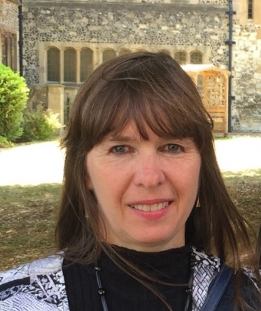
Beverley Paton leads the Canterbury Society’s work on open spaces and biodiversity and is active in a number of local environmental initiatives across the district. We spoke to Beverley about protecting Canterbury’s green heritage, the growing pressures on nature locally, and how residents can get involved.
From Johannesburg to Canterbury
You have lived in Canterbury since 2011, but your origins are a very long way from here. What brought you to the city?
I was born in Johannesburg, South Africa and moved to Canterbury 16 years ago after visiting the city in 2010 and falling in love with it. I have family ties to Kent through my late Mother and her family.
You have been a curator and an educator in the field of art, and have exhibited your work as an artist. How does that interest combine with your support of Nature?
I was curator of Drawings, Prints and Watercolours at the Johannesburg Art Gallery and later moved into visual arts education and Special Needs Education. I have exhibited my printmaking and drawings in both South Africa and in Kent. The central focus of my visual art practice is not directly related to my interest in biodiversity. In my printmaking and drawing I have, for many years, been exploring the metaphoric, transformative and transgressive roles played by women in the visual arts, mythology and literature. However, I have always been fascinated by insects, which are often incorporated in my art works. Insect populations in the UK have suffered drastic declines, with over 50% lost since 1970, so I have focused much more on these species in my recent work.
Protecting Nature in Canterbury
Just how much are green spaces and Nature under threat locally?
There is a great urgency to protect the natural environment, as animals and plant species are under severe threat of extinction through human activities with scientists predicting a mass extinction. The UK is ranked among the most nature-depleted countries in the world and is in the bottom 10% of nations for biodiversity intactness. Nearly one in 6 species is at risk of loss. Our rare and precious chalk stream, the Great Stour River, which forms a continuous greenbelt through Canterbury is under extreme threat from over-abstraction of water, pollution, including sewage releases, plastic litter and nutrient runoff -with roughly 77% of chalk streams in the UK failing to meet good ecological status. Urban green spaces which are not protected by Village Green Status are under constant threat from development.
The importance of biodiversity is clearly close to your heart, and you lead the Canterbury Society's response to the City Council's Draft Biodiversity Strategy. What changes or recommendations do you think should be made to the strategy?
It is encouraging to see the development of the Draft Biodiversity Strategy following the Declaration of a Biodiversity Crisis by Canterbury City Council in 2023. The Vision of the Draft Biodiversity Strategy is ambitious. It is excellent to see that the focus is on both nature recovery and resilience, as well as on better connectivity and the expansion of wilder landscapes. It is promising to see that the Draft Biodiversity Strategy ambitiously secures the delivery of 20% biodiversity net gain in line with the Draft Local Plan, which is above the national statutory 10% BNG. The Canterbury Society strongly supports the overall biodiversity vision for nature in the Canterbury District. While the Canterbury Society supports the vision, this support is subject to the inclusion of measurable outcomes, clear delivery priorities, and a defined monitoring framework to ensure the strategy translates into tangible biodiversity improvements. In particular, the strategy would benefit from setting out a baseline, target and timeframe for key biodiversity indicators across the district.
The initiative for a charter for the Stour River, which is being worked on by the Friends of the Kentish Stour needs to be included in the Biodiversity Strategy. The rights for rivers movement has an important role in protecting our precious chalk stream rivers, including the Great Stour River. The key rights of rivers should be included: the right to flow, the right to perform essential functions, the right to be free from pollution and the right to native biodiversity.
As mentioned under The Principles Underpinning this Strategy, the Council’s leadership role is key to the success of the Biodiversity Strategy. At present CCC plays an important role in assisting communities to set up Friends of Groups for green open spaces in the District. It also guides and supports these groups with improving biodiversity and developing management plans. The Council does this well. However, the Biodiversity Strategy should also include CCC’s leadership role in providing clearly communicated guidelines for ways in which owners of private gardens/open spaces can work together to create improvements for biodiversity as private gardens form a significant percentage of green urban spaces. The Council could promote what residents and businesses can do or are already doing. There should be an ambition to promote biodiversity net gain in existing gardens, just as new developments are expected to provide 20% net gain for biodiversity.
What are the benefits of safeguarding Nature, and how best can local people be encouraged to support it?
Safeguarding nature is fundamental to human health, economic stability, and environmental resilience. Nature provides us with breathable air, clean water, and food security. There are social and economic costs to not valuing and conserving the natural world. Access to green spaces is scientifically linked to improved health, reduced stress and anxiety, and improved mood. Natural habitats that are in good condition are essential in combating climate change, for example woodland, forests and peatlands are natural carbon sinks. Healthy ecosystems also provide natural barriers in disaster resilience. For example, the activities of one of nature’s engineers, beavers (now resident in Canterbury city centre) provide resilience to flooding. Wetlands created by beavers also serve as purifiers, filtering pollutants to maintain clean water sources. Safeguarding our pollinators which include wild bees, moths, butterflies and many other insects is crucial for the global supply of fruits, nuts, and vegetables.
Local residents can support their local park’s Friends of Group, or conservation groups such as Kent Wildlife Trust or the Kentish Stour Countryside Partnership and get involved as volunteers. Canterbury has several friends of groups, for example, Friends of Westgate Gardens, FO Beverley Meadows, FO Dane John garden and ST Mary’s de Castro, FO Kingsmead Field Village Green, FO Solly’s Orchard and FO Canterbury Cemetery. There are also Canterbury based initiatives such as the Canterbury District Swifts (FB) which residents can support. Local people who have gardens, big or small, or even just a balcony space, can support pollinators by making their space more wildlife friendly. Some of the ways this can be done are by planting areas of wildflowers and pollinator friendly perennials, selecting native trees and shrubs, including native hedging in gardens etc. More ideas for gardening for wildlife can be found here.
![Beverley helps plant saplings [in the ‘Miyawaki Forest’] at Kingsmead field](https://www.canterburysociety.org.uk/wp-content/uploads/2026/05/Paton-at-Kingsmead.jpg "Paton at Kingsmead")
Beverley helps plant saplings (in the ‘Miyawaki Forest’) at Kingsmead field
Nature Recovery in Action
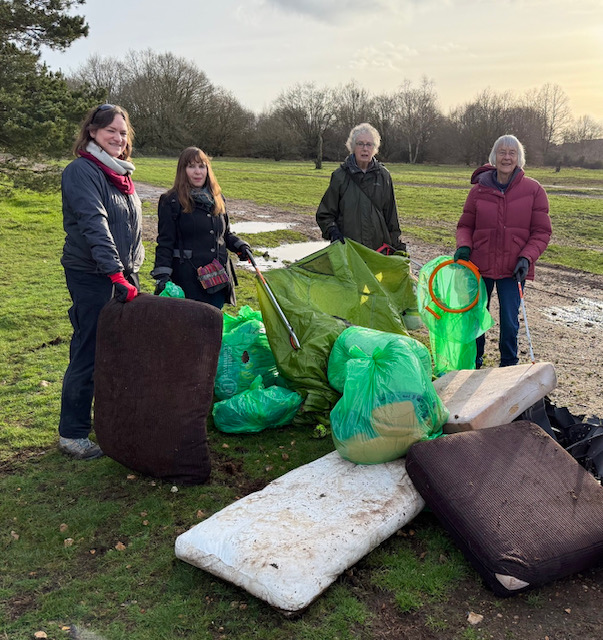
Beverley (2nd from left) helps clear an abandoned camp at Old Park
As well as also serving on the committee of the annual Great Stour Riverfest event, you are a River Warden. Can you outline what that role entails and why it's important?
The Canterbury District has several river wardens or guardians who volunteer with the Kentish Stour Countryside Partnership project called Our Stour. The wardens have a particular stretch of the river which they monitor. For example, Sian Pettman and I are river wardens for the stretch of the Stour River which flows through Kingsmead Field Village Green. As river wardens we work alongside the Council helping to keep our river free of litter/flytipping and we report any problems to the Council and the Environment Agency. The river wardens volunteer for and organise river litterpicks and many have been trained in riverfly monitoring which they carry out on their stretch of the river. Riverfly surveying is an important citizen science initiative to monitor the health of our rivers. River wardens monitor aquatic invertebrate populations, specifically mayflies, caddisflies, and stoneflies to assess river health. We use standardised “kick-sampling” methods to count these pollution-sensitive larvae, allowing us to rapidly detect water quality issues and trigger investigations by the Environment Agency into potential pollution incidents.
At Kingsmead you have helped to create a "Miyawaki Micro-forest." What is that exactly?
Kingsmead Field was nominated by local KCC councillor, Alister Brady and Anna Ritchie from KCC’s Plan Tree for the Miyawaki mini-forest pilot project and in February 2025 over 500 mixed native species saplings were planted by our volunteers. Kingsmead Field is the site of the first trial plot in Canterbury. The Miyawaki methodology is based on a woodland establishment and management approach, developed by the Japanese botanist Dr Akira Miyawaki. It was developed to quickly reconstruct indigenous woodlands on deforested land or areas with degraded soils. This method has been used in Japan for over 50 years for the purpose of environmental conservation. It has also gained traction in Europe and the UK where it is being used to quickly establish small pockets of woodland in urban green spaces. Planting a Miyawaki mini-forest involves densely planting a wide variation of native tree and shrub species suited to the site. The soil is well mulched and the site is maintained for two to three years after which there is very little intervention. There is a greater survival rate for trees planted in this method and growth rates are higher as well. After three years or so the Miyawaki plot will resemble a dense thicket similar to early successional woodland. As the Miyawaki develops it provides foraging and shelter for wildlife.
You are active in several Canterbury groups concerning the environment, for example as chairperson of the Friends of Kingsmead Field. Do these projects fit well with your work at the Canterbury Society?
My work with Friends of Kingsmead Field dovetails with my role in Canterbury Society where my focus is on Open spaces and Biodiversity. The Friends of Kingsmead Field Village Green grew out of the campaign to save the Field from development. In 2019 Village Green status, the highest form of protection for open spaces, was obtained for the field. The friends group now focuses on enhancing the field for relaxation, recreation and for wildlife. The friends group works alongside the City Council to enhance the field for biodiversity.
The Canterbury Society focuses on protecting and enhancing the heritage of Canterbury. The green heritage of Canterbury is a significant part of this heritage, including the city’s parks, green spaces, and the rare chalk stream habitat formed by the Stour River which runs through the city. In 2018 Canterbury Society supported a conference on Growing Canterbury’s Green Heritage. Following this conference, the Canterbury Society has held an annual Green Heritage Talk. Canterbury Society is represented at the Canterbury Riverside Group, the Great Stour Riverfest working committee and the Canterbury District Biodiversity Network. The Canterbury District Biodiversity Network was set up as a community initiative in 2020 with the aim of bringing together representatives of groups working to conserve biodiversity, including conservation organisations, statutory agencies, CCC and KCC, local community groups, the universities etc. to share information and encourage joint working on biodiversity-related issues. The Network was formed to facilitate the exchange of information between these groups to promote nature-based solutions to climate change and encourage local, regional, and national action to address the biodiversity crisis. The Network hold three meetings a year at which there is a main speaker and updates from various groups.
Future Projects and Priorities
Is there any new project planned? How might the Canterbury Society assist?
The Canterbury Society has two volunteers who continue to work in the Butterfly Garden to maintain and enhance this little pocket garden for pollinators. We are also looking for volunteers to continue the work we have done at the Franciscan Way – the little passageway lined by flowerbeds which connects Greyfriars Garden to Stour Street.
Canterbury Society is largely an advocacy organisation and therefore plays an important role in supporting, promoting and at times fundraising for local biodiversity initiatives. For example, we supported and helped fundraise for the Canterbury Wild Walls initiative. The aim of this initiative, which began around 2022, is to create a mural trail in Canterbury to promote nature-based solutions to the biodiversity crisis and highlight endangered or reintroduced native species. In 2022 Canterbury Society supported this initiative to have the Bison and Chough vinyls installed in Guildhall Street and the Bison Mural painted next to the Gulbenkian Theatre at the University of Kent celebrating the species’ return to Kent. Other key murals on the Wild Walls trail so far include; the Heath Fritillary & White-spotted Sable Moth Mural: Located on a wall opposite Westgate Towers, a chough mural located at Canterbury Christ Church University and the Beaver Mural located at Canterbury Riverside. A mural of the Fisher’s Estuarine Moth on the Tankerton slopes in Whitstable is planned to be painted in September 2026. I am sure Canterbury Society will support future murals as this project develops.
Another new initiative is Canterbury District Swifts, which has been set up to spread the word about the precipitous decline of the common swift in the UK, to monitor and record swift numbers, to identify and work to preserve current nest sites, install boxes and swift bricks to provide further nesting opportunities and to engage the public generally in Canterbury and the surrounding district. This is an initiative I would like to see the Canterbury Society support and engage with in the future.
Finally, if you could have one wish about protecting Nature and promoting biodiversity, what would it be?
The major factors threatening biodiversity in the UK are intensification of agriculture, and habitat loss and fragmentation, which restricts movement of wildlife. This is primarily caused by expanding urbanization and infrastructure development. (Worldwide more than 75% of land-based natural environments have been significantly altered by humans.) It is therefore essential that the protection and enhancement of natural habitats and biodiversity is placed at the heart of all national and local council policies and that this is followed through by delivery and rigorous enforcement. The Canterbury Society can play an important role in advocating for biodiversity to be at the heart of decision making at a local level, as well as promoting and supporting the work of many local community groups working to protect and enhance biodiversity.
I very much enjoyed reading Beverley’s answers . Particularly interesting were the explanations of the role of the River Wardens and the cutting edge micro forest initiative. I do hope the latter proves to be successful here paving the way for many more across the district on suitable sites
Beverley’s comments about the Bio diversity consultation were spot on and very closely mirrored those I submitted on behalf of ACRA ( Alliance of Canterbury Residents Associations) .
Much needs to be done to convert a very encouraging vision into practical action and ACRA looks forward to working closely with the Canterbury Society to bring influence to bear on the powers that be to achieve that ambition