
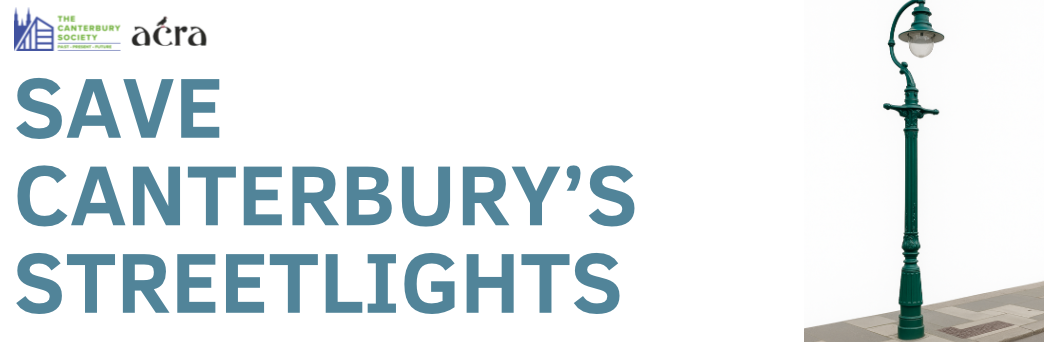
Streetlight row exposes deeper gap in how Canterbury protects its historic streets
9th January 2026
Following public concern, national media coverage and a petition signed by thousands of residents, Canterbury City Council has confirmed that no further historic cast-iron lampposts will be removed while options are reviewed.
This pause is welcome. But information shared with the Canterbury Society shows that the loss of Canterbury’s historic streetlights is not the result of a single bad decision or a sudden safety crisis. It points to a deeper issue: the lack of a clear plan for how the city’s historic streets should be treated.
Cossington Road shows that residents speaking up can make a difference… this pause gives everyone the breathing space needed to get the decision right, not rush through something that would permanently damage the character of our city.
When the campaign began, it was understandable to assume that Kent County Council was acting alone, replacing historic lampposts without consultation. That is what residents were seeing on the ground.
However, emails released under freedom-of-information rules tell a more complicated story. They show that for at least four years, Kent County Council officers repeatedly asked Canterbury City Council for guidance on how failed historic lampposts should be handled. Those requests included site visits, design discussions and proposals for Canterbury-specific replacements.
In several cases, county officers warned that without a clear response, they would have little choice but to fall back on standard, off-the-shelf replacements. In one email, an officer notes that doing so “would be a shame”.
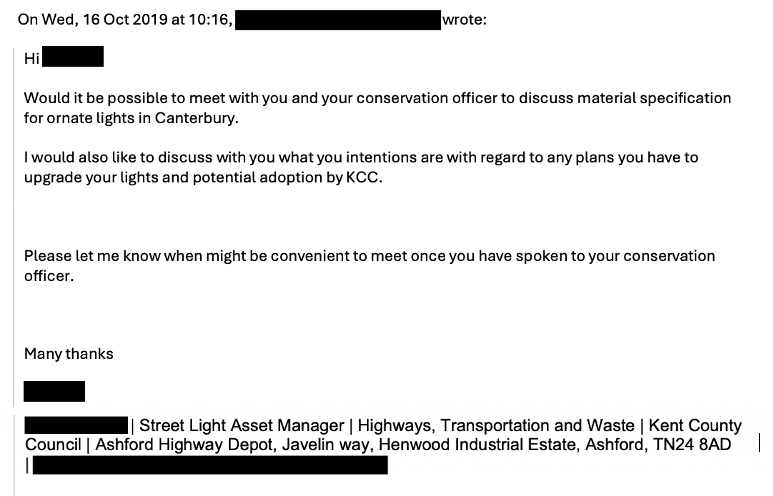
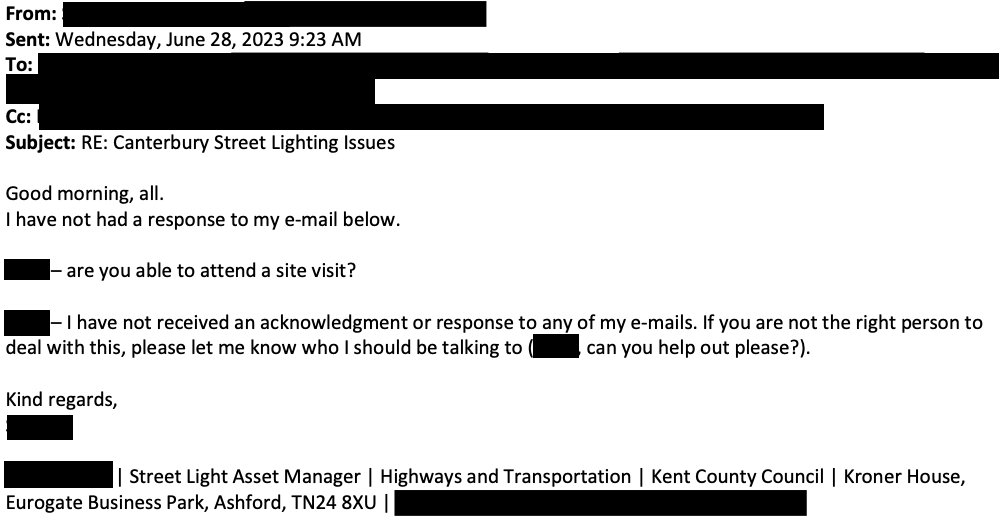
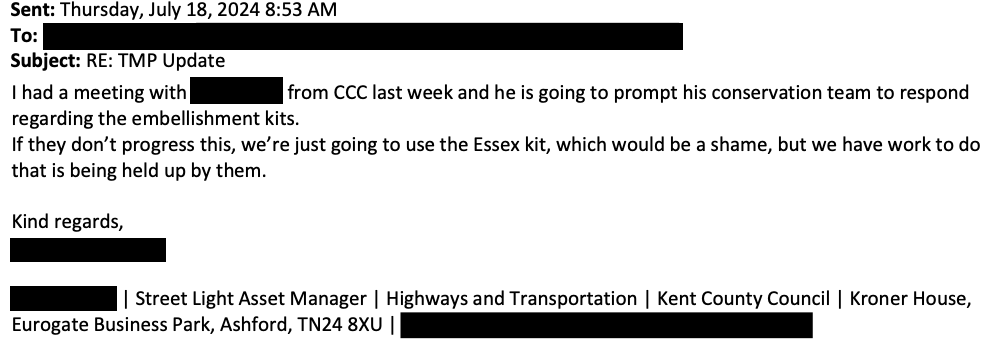
Internal correspondence shows Kent County Council officers seeking heritage direction from Canterbury City Council over several years, and flagging that delay would force a default to standard replacements.
That matters, because it changes the picture.
The spread of generic steel lampposts has not happened because Canterbury’s character was ignored. It has happened because, without clear direction from the City Council, decisions defaulted to what the rules allow, rather than what suits a World Heritage city.
This wasn’t a rogue decision by the County Council.
For years, officers asked the City Council how historic street lighting should be handled. Without an answer, they defaulted to the simplest option….
…the real problem is that Canterbury still lacks a clear, shared approach to its streets and public spaces.
A wider gap in how the city is managed
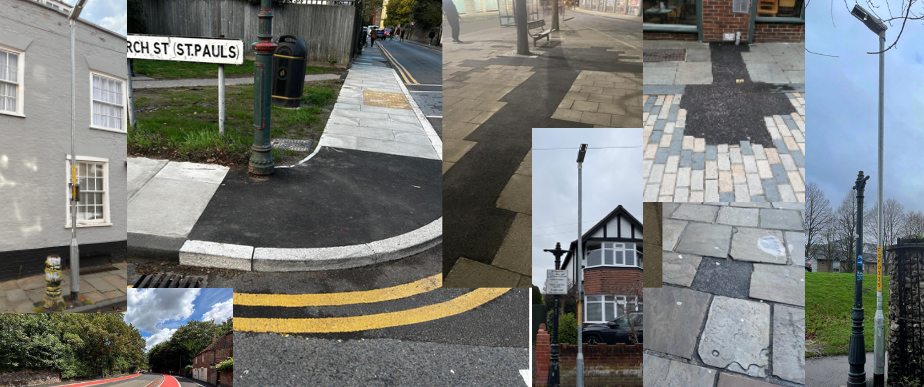
The result of policy by default:
In the absence of clear streetscape standards, works are delivered to minimum compliance rather than local character. The result is inconsistency, visual clutter and avoidable harm to historic streets.
The lampposts have exposed a much broader concern.
Canterbury does not have an agreed, city-wide approach to how its historic streets should look and feel.
Without that:
– materials and finishes vary from street to street
– decisions depend on who happens to be involved at the time
– and short-term fixes slowly chip away at the city’s character.
Incredibly, Canterbury is one of the last places in the country to have retained a full set of Victorian cast-iron streetlamps, along with Edinburgh and Westminster.
They are an intrinsic part of the World Heritage City’s character. Yet they are now at risk because of what you might call the law of unintended consequences: a failure to invest in unglamorous but vital things like local plans and conservation officers.
We support the Canterbury Society’s call for a clear policy to protect and celebrate the city’s remarkable streetscape.
As we argued in our 2021 report, Canterbury Take Care, heritage is what gives Canterbury its unique appeal to visitors, residents and business. This isn’t about nostalgia – it’s an economic issue too.
This is not a new issue. The lack of clear and specific guidance was highlighted as an urgent gap following the Longport scheme in 2023. Once again, the County Council took the blame, even though it was acting within the space left open by the City Council.
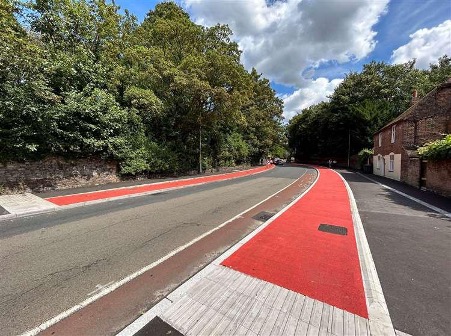
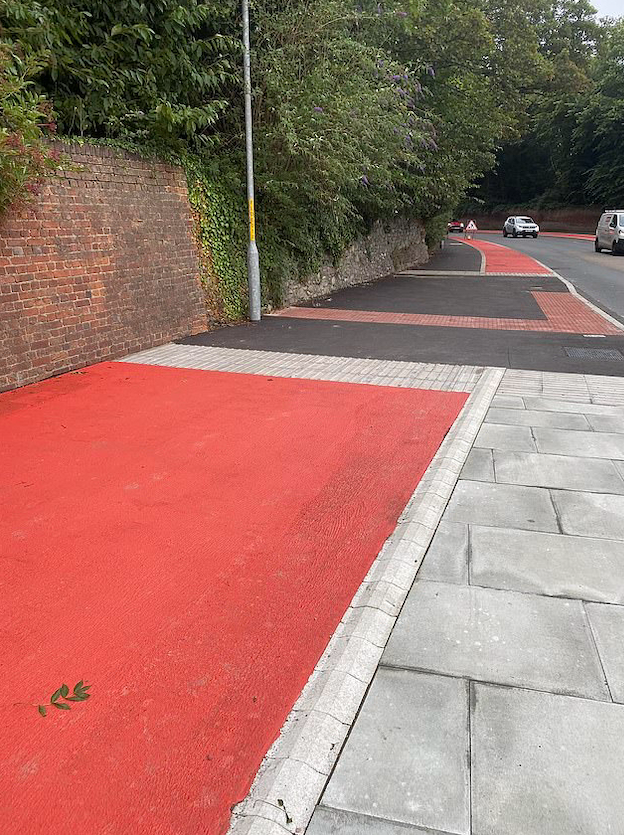
Longport, 2023:
A lack of local streetscape guidance resulted in nationally compliant but visually inappropriate materials beside a World Heritage Site, highlighting the consequences of a policy gap at city level.
Without a clear plan in place, there is no safety net. When decisions stall or advice is delayed, change happens by default.
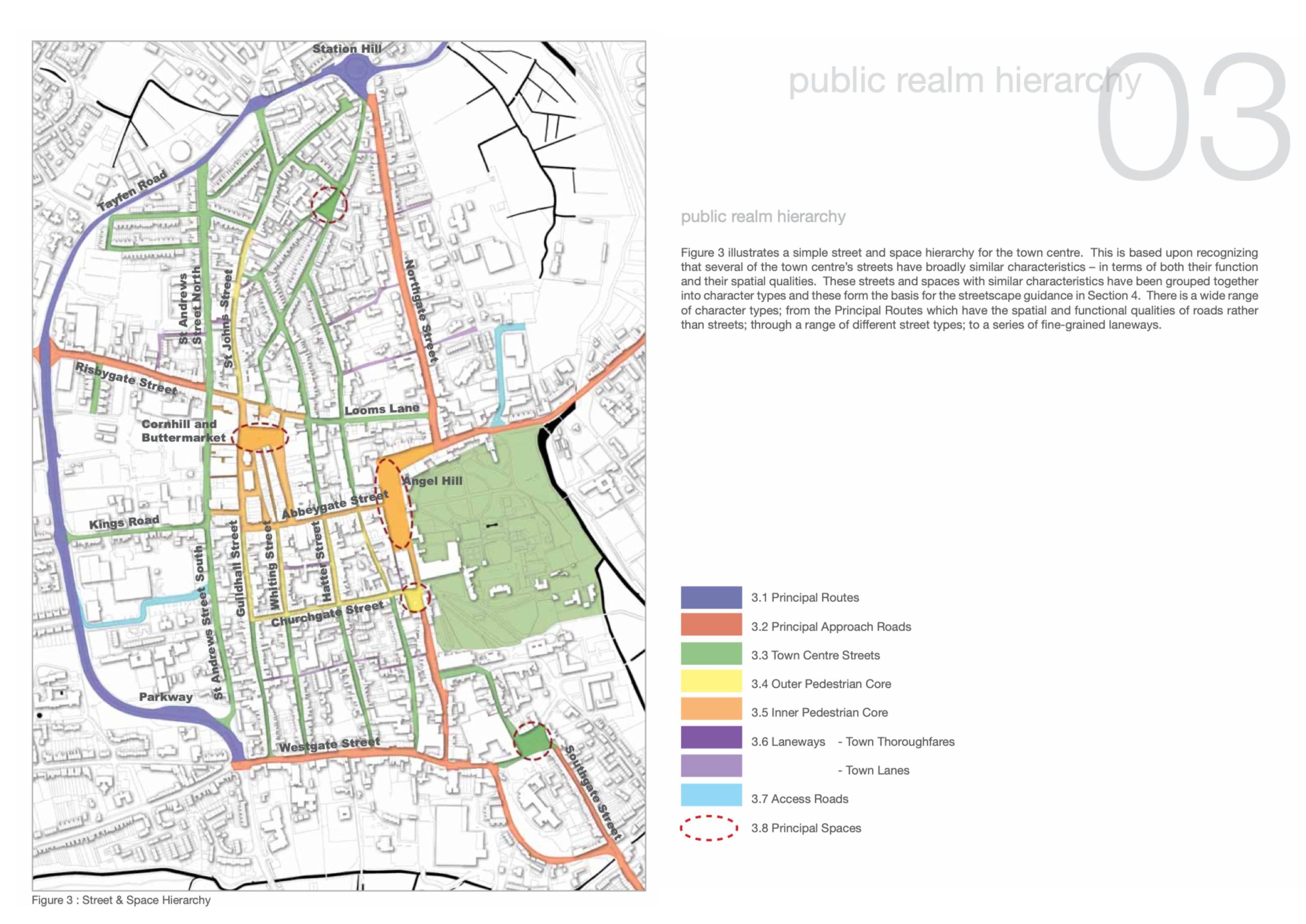
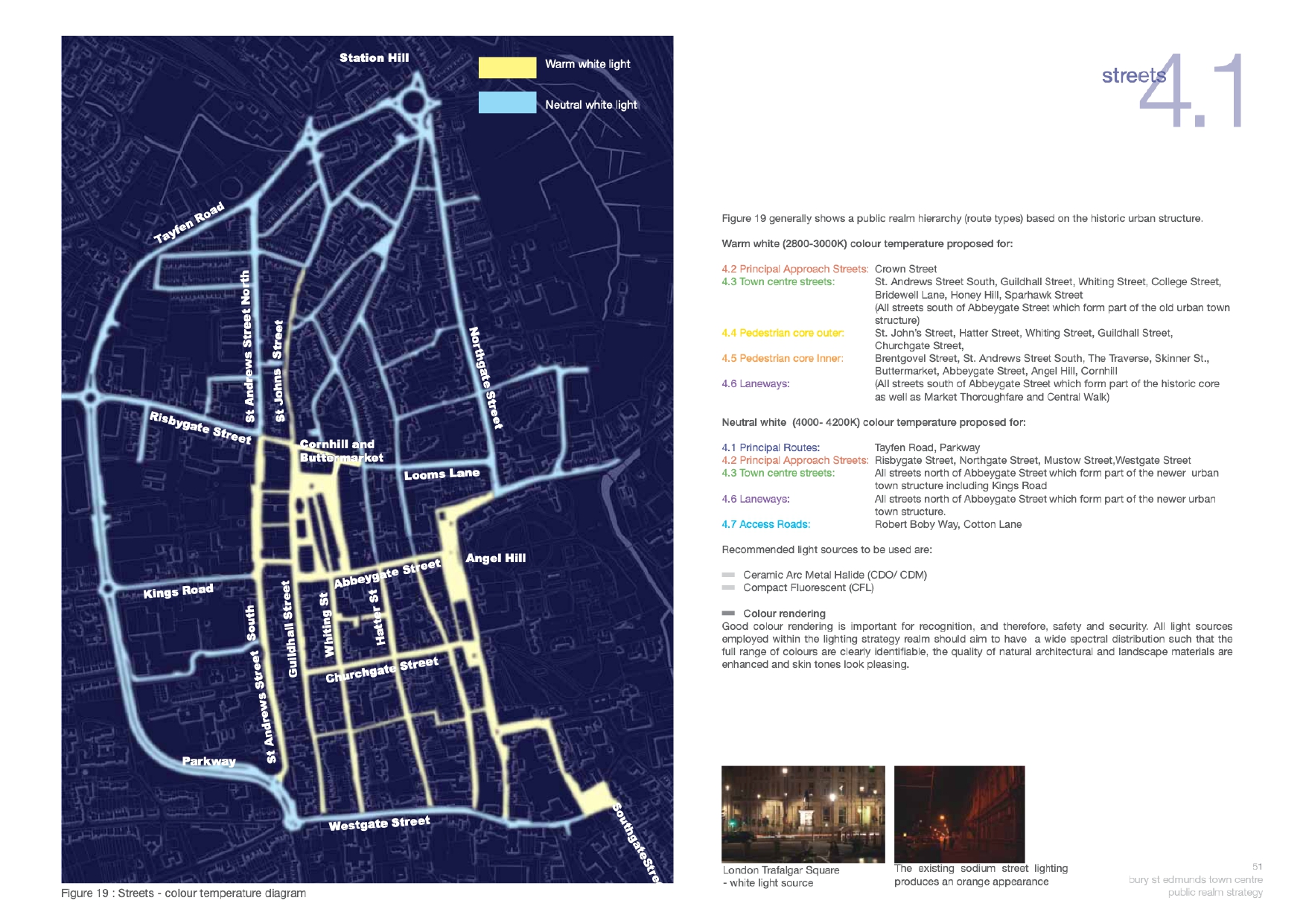
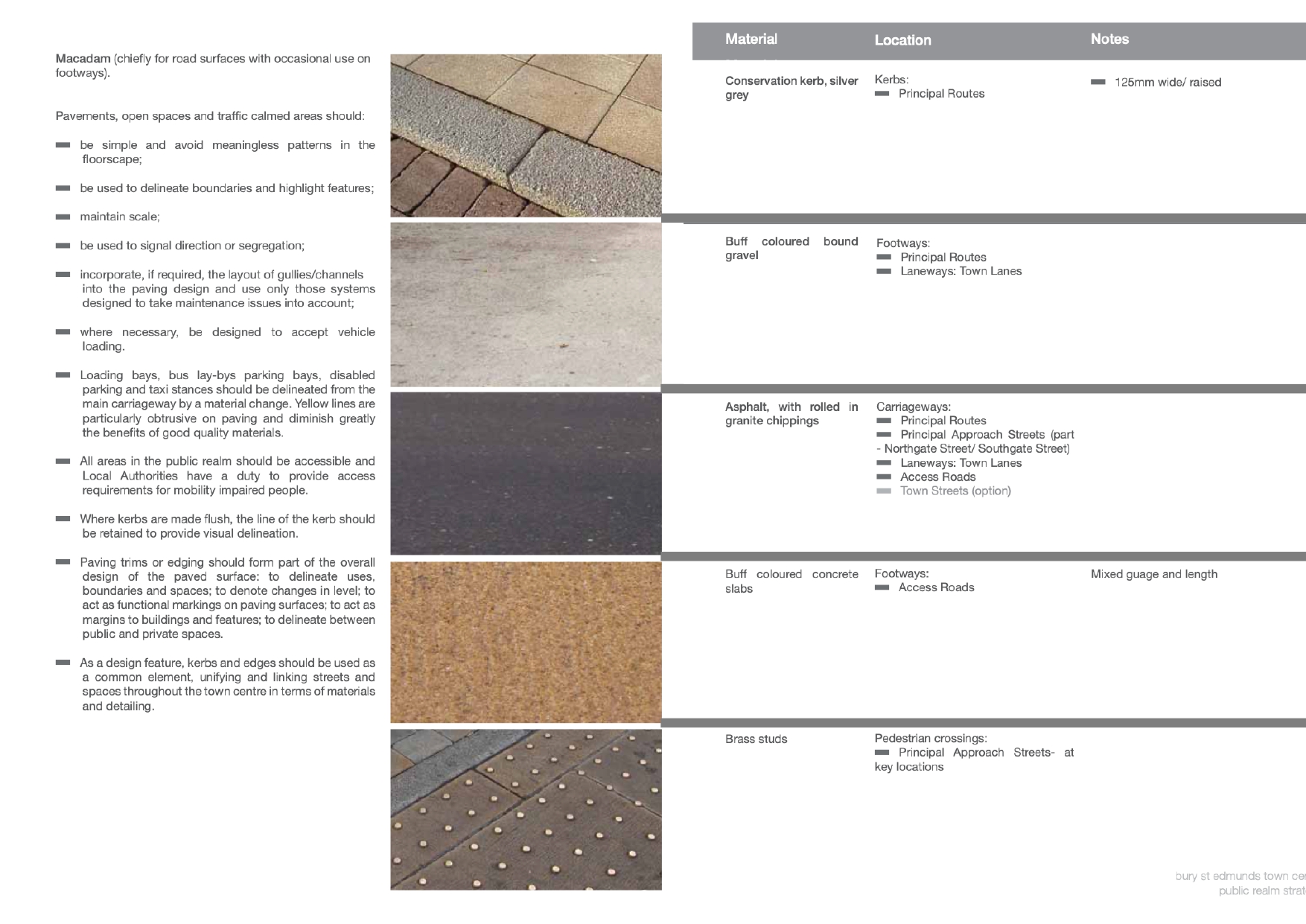
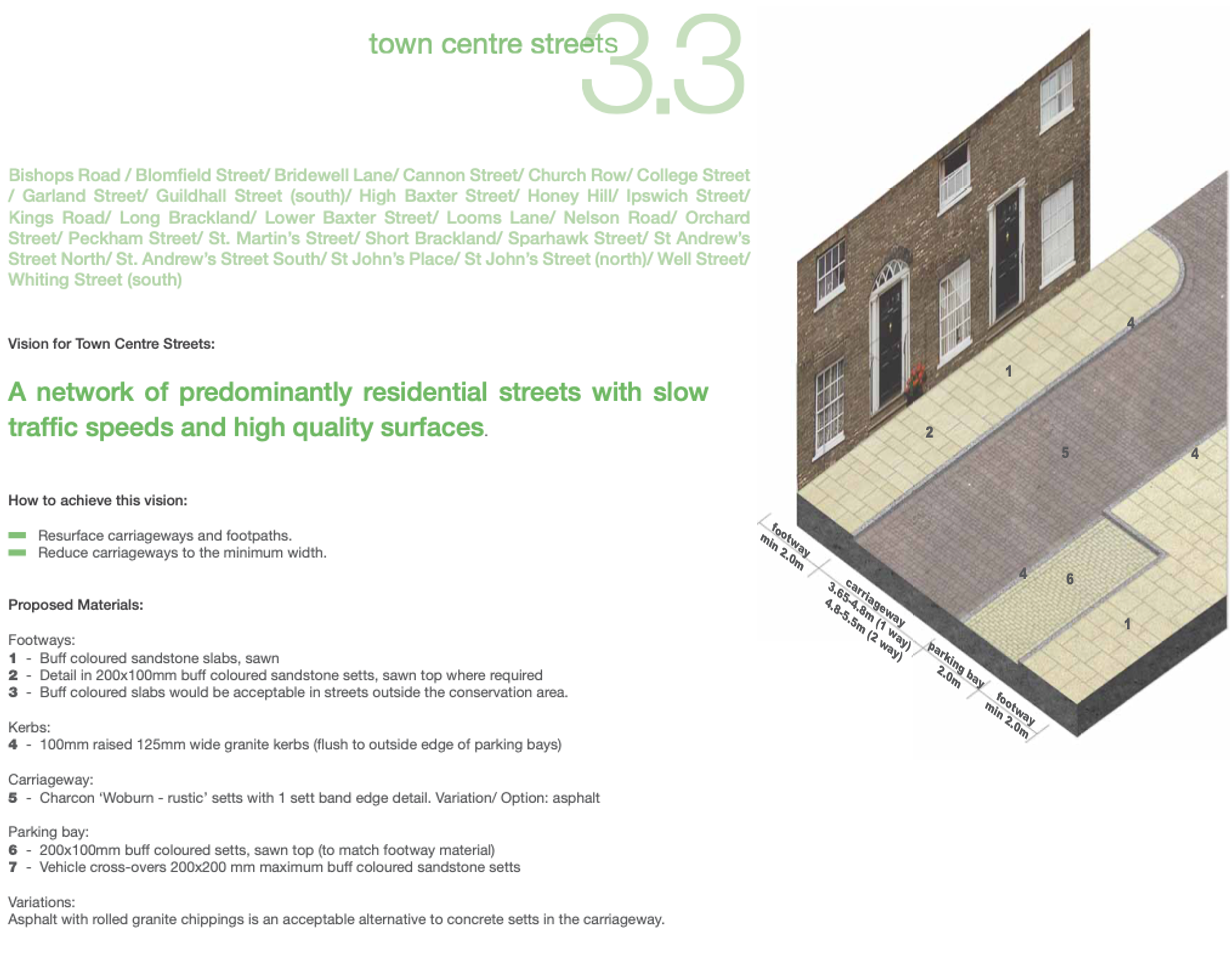
What is missing in Canterbury:
A clear streetscape and public-realm framework setting out materials, finishes and design standards. This kind of guidance gives officers, councillors, developers and utility companies a shared reference point — and prevents decisions being made by drift.
Images: Extracts of Bury St Edmunds Town Centre Streetscape Strategy
What happens next
The campaign has never been about blaming one authority or another. It is about fixing a long-standing weakness that has allowed small, avoidable losses to build up over time.
The pause in removals, and the City Council’s recognition of the importance of Biggleston cast-iron lampposts, address the immediate concern. But the wider issue remains unresolved.
The second part of the Society’s petition calls for the City Council to put in place a clear public-realm design framework for Canterbury’s historic core — setting agreed standards for materials, lighting and street furniture — so that future maintenance and renewal works are guided by policy rather than by default.
The Canterbury Society has secured a meeting with Kent County Council’s Cabinet Member for Highways and we have also requested a corresponding meeting with the Canterbury City Council’s Cabinet Member for Heritage.
This episode shows that the loss of Canterbury’s character is not inevitable, however it will happen when there are no clear rules put in place to prevent it.
Notes to Editors
EIR Disclosures
The Society’s analysis is based on correspondence disclosed by Kent County Council following an EIR request. A parallel request to Canterbury City Council is ongoing.
Public support
The campaign has attracted more than 3,000 petition signatures, alongside extensive national media coverage, reflecting widespread concern about the future of Canterbury’s historic streetscape.
Governance context
Kent County Council maintains street lighting for safety purposes. Canterbury City Council is the Local Planning Authority and is responsible for setting conservation and streetscape standards. Where no local framework exists, statutory undertakers are permitted to proceed using nationally allowed solutions.
City Council position
Canterbury City Council’s Cabinet Member for Culture, Heritage and Council Services, Cllr Charlotte Cornell, made a statement to Full Council on 8 January 2026 confirming that removals have been paused, that Biggleston-style replicas are being pursued, and that discussions with Kent County Council are ongoing.
Read the statement in full
We at Canterbury Heritage Design Forum applaud the success of Caterbury Society in forcing a partial resolution of the incompetence of CCC. We submitted proposals to CCC for them to set up a coordinated street scape design regime with KCC in 2022 When the revised Conservation Area Management Plan called for this – our submission is on our website at http://www.chdf.org.uk.
The released emails show a cynical manipulation and a culture of bureaucratic deception, which hopefully is now a thing of the past.
Tim Carlyle. Chair CHDF
I have signed the petition and want the original lights to stay. However, where new steel lights have to be installed, and they are the roadside of the pavement, can they include charging points for electric vehicles and hybrids? Many councils are already doing this. It doesn’t involve allocating electric parking places.
Canterbury would lose part of its heritage if these lampposts were removed.
Visitors come to the city because of it’s history, and these lights are part of that.
Thanks to everyone who helped shine a light on this.
The emails are simple. KCC kept asking CCC what should happen when these historic posts failed and did not get an answer and without clear advice or a plan from the CCC, KCC used standard replacements, because that is what the rules allow. Officers even said this would be a shame, but delay left them little choice.
The onus here seems to sit squarely on CCC. If anything positive comes from this, it should be clear rules for how Canterburys historic streets are looked after, so decisions respect our city’s heritage!